Is the Designer Profession Really Glamorous? A "Raw" Perspective from an Insider
When mentioning the Designer career, many people often imagine the image of highly artistic individuals, sitting and working in extremely "chill" spaces with cups of coffee, and freely letting their creative ideas fly. But behind that "glamorous" cover, what does the reality of this job demand? How do you survive and advance in a fiercely elimination-driven market, especially when AI is developing at lightning speed?
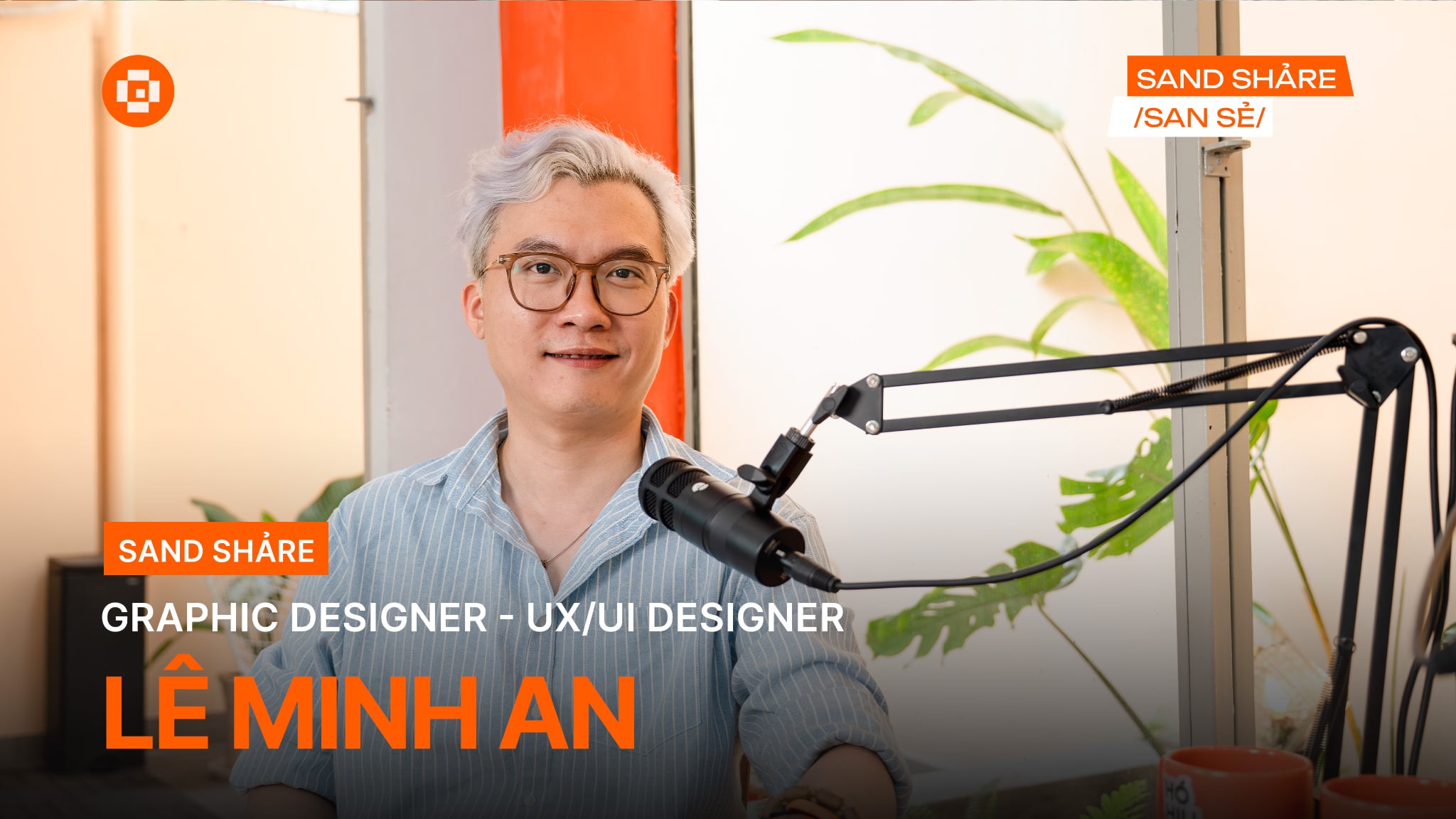
This article will break down extremely practical and somewhat "raw" perspectives on the Creative profession – compiled from my own experience as a Lead UI/UX Designer and R&D Manager with many years of "battle". From the starting point, survival skills, to career development strategies, everything will be decoded to give you the most panoramic picture.
1. The Starting Journey: You Don't Have to Study the Right Major to Do This Job
Many people mistakenly believe that to become a good Designer, you must be formally trained from the beginning at art schools. But in reality, the path to design for many experts consists of unexpected turns.
For me, that journey started with... Chemical Technology. In 2008, when the concept of "Design" was still very foreign in Vietnam, I realized my current major was not suitable and decided to drop out. I plunged into the labor market with all kinds of jobs: from sales, computer room marketing, to game marketing.
It seemed like those were "out of place" steps, but it was marketing that trained me with a sharp weapon: "Marketing thinking in design". Thanks to that, I have the ability to deeply understand customer psychology – which completely sets me apart from those who are only proficient in graphic tools. My later transition from Graphic Design to UI/UX Design was also a "gradual movement" process, going from understanding users to optimizing their experience in the digital environment.
It was the ability to understand customer psychology from my marketing days that led me to realize a harsh truth in the design profession: Knowing how to draw beautifully has never been enough.
📌 Key Takeaway: Multidisciplinary experience is not a step backward. Every job you have ever done (sales, marketing, services...) is valuable material to form "empathic thinking" – one of the core elements of the Design profession.
2. The Biggest Misconception: 30% Tools – 70% Communication
If you think that just being proficient in using Photoshop, Figma, or Illustrator is enough to become an outstanding Designer, you are mistaken. In the professional design world: Using software (tools) only accounts for 30-40% of success, the remaining 60-70% lies in communication skills.
One of the classic "pains" of a Designer is receiving the request: "I want my app to look like Apple's". If you only listen to the words and lack communication skills, you will copy Apple's interface exactly. But if you know how to extract and "read between the lines," you will realize the true insight: The customer wants a neutral, elegant style that highlights the product without being cluttered.
In this current era, AI can provide design solutions faster, more beautifully, and will never argue back with customers. To compete with machines, Designers must communicate well to solve human "pain points". Learn to speak the customer's language. Instead of using the technical term "Saturation" which confuses them, relate it to the concept of "Skin tone" if you are working with a Spa client.
However, is "Thinking is more important than Tools" true in every stage? The answer is NO:
For Junior/Fresher: 100% Tools are the most important. In the first few years, no one has time to wait for you to "think" if you operate too slowly.
For Mid-level: Once tool skills are solid, the proportion of communication will increase for you to run projects independently.
For Senior: Tools at this point are a solid support, while communication and strategic thinking are survival factors to guide the entire project.
And once you understand the customer's wishes through communication, the next thing you need to do is define the most suitable "beauty" for each specialized design sector.
📌 Key Takeaway: Software skills are a "Necessary Condition" (especially for beginners), but Communication and "translation" skills of the customer's wishes are the "Sufficient Condition" for you to advance to higher positions.
3. When "Beauty" Is Redefined: Graphic Design vs UI/UX
Many newcomers to the field often wonder if the aesthetic standards of Graphic Design and UI/UX are different? In essence, both are applied arts and must follow the 4C standards: Correct, Complete, Cool (beautiful), and Creative (unique). However, the way they are expressed is completely different:
Graphic Design: Leans towards Storytelling. This segment sometimes needs breakthroughs, improvisation, and can be a bit "extra" with vibrant colors to attract immediate attention (for example, an event poster or banner ad).
UI/UX (Product Design): Puts Usability first. An application or website needs clear content and easy navigation. Beauty here is simplicity and high usability to avoid distracting the user.
The biggest difference between these two fields lies in Accuracy and Systematization. A Graphic Designer might be used to improvisation, where a discrepancy of a few millimeters does not matter, using CMYK color systems and mixing colors based on intuition. But when doing UI/UX, accuracy is mandatory. Everything is measured in Pixels (Pixel Perfect), and calculating color codes is standard Hex/RGB (Hue, Saturation, Brightness). That is why the term Design System was born in the Product Design segment – a complex, scalable, and much more comprehensive structural system compared to traditional Brand Guidelines.
The clear differentiation between design niches along with the increasingly demanding requirements of the industry mean that Designers cannot stand still if they do not want to be left behind.
📌 Key Takeaway: "Beauty" in Graphic Design is eye-catching and storytelling. Meanwhile, "beauty" in UI/UX is neatness, usability, and compliance with the absolute precision of a system (Design System).
4. Survival Strategy in a Fiercely Elimination-Driven Market
The Design industry is currently witnessing a reality: "Easy to enter, but also easy to quit". Because the barrier to entering the industry is not too strict, the input funnel is very wide, leading to an inevitable narrowing of the output to filter the most elite personnel.
To stand firm in the industry, especially when facing a generation of Gen Z and Gen Alpha who grew up with AI, you need a clear survival strategy:
Develop according to the T-shape model: Do not rush to only dig deep into one niche. Go horizontally first (experience many areas like Graphic, Web, App, and go through many working environments) to expand your worldview. Only when the mouth of the pit is wide and gradual can you dig down deep easily and have a way out.
Always maintain critical thinking before AI: Many young people today depend on AI and lose their independent thinking. Always ask "Why?" before every design decision. "Why did I use this color?", "Why did I place this button here?". The human element and the reasoning behind each design are the strongest shields protecting you against AI.
Upgrade yourself by 1% every day: No need for huge leaps. Continuous learning and continuous execution to be 1% better every day will help you grow 3 times more after just one year.
In addition, understanding market culture is also a way to optimize opportunities. The Northern market often prioritizes tradition and depth; while the Southern market favors speed, free-thinking, and readiness to break the old. This flexibility to adapt to these cultural flows will help Designers expand their career direction.
📌 Key Takeaway: Do not become a prompt engineer for AI. Build your own competitive advantage by training T-shaped thinking, continuously asking "Why?" to master the tools, and persistently upgrading your expertise every day.
Conclusion: The Immutable Law - "Symbiotic Transaction"
In conclusion, behind the "glamour" of the Designer career is a continuous process of learning, practicing communication, understanding business, and self-discipline. No matter what position you are in, always remember the most core economic concept: A mutually agreed transaction.
Going to work is essentially going to sell products. You sell your brainpower and skills, and the company spends money to buy them. If the company pays you a salary of 10 dong, prove your ability by bringing back to them a value of 12 dong, 14 dong. You can only survive, be sought after, and grow sustainably when you deliver more value than the cost others spend to hire you.
The Designer profession is definitely very glamorous – but only when you are brave enough to overcome the dark spots and create your own position with your own hands.